Style it
yourself
A free tool for putting clothes together with science and intention.
Our Manifesto
Free and staying that way
Remember that one piece you bought on feeling that has a high cost per wear, or do you, in fact, have a few of those? Have you wondered why you never wear them? The answer is that they don't pair with anything else you own, or you just don't know how to pair them. It took us a long time and a wardrobe full of random pieces to realize that the problem is not how much we own, but that nobody ever taught us what pairs with what. We already have more great outfits than we think, but what is missing is the eye: palette, silhouette, formality, proportionality. The industry calls that taste.
Most brands, especially fast fashion ones, bottle your doubt and sell it back with every purchase, every trend cycle. On the other side, we have multiple apps out there pretending to solve the problem, by making you think you paid a bargain price for a piece (while they claim affiliate commissions) or by selling you the idea of advanced AI styling, but in reality they are just another subscription. So we wrote the rules down, built a tool around them, and gave the tool away. Open-source, no paywall, no ads, no tracking.
Books, music, and movies have all been digitized. Why not clothes? Once the entire collection sits in one view, you can finally see what is missing. And to our fellow fashion enthusiasts: we are not against buying more clothes. We just want you to buy smarter by becoming a better stylist yourself. The more you know, the better you can curate.
TLDR, we open sourced SIY for the love of the game.
 Run it yourself
 Get the extension
Kept online by
 Supabase
 Vercel
 Cloudflare
 Gemini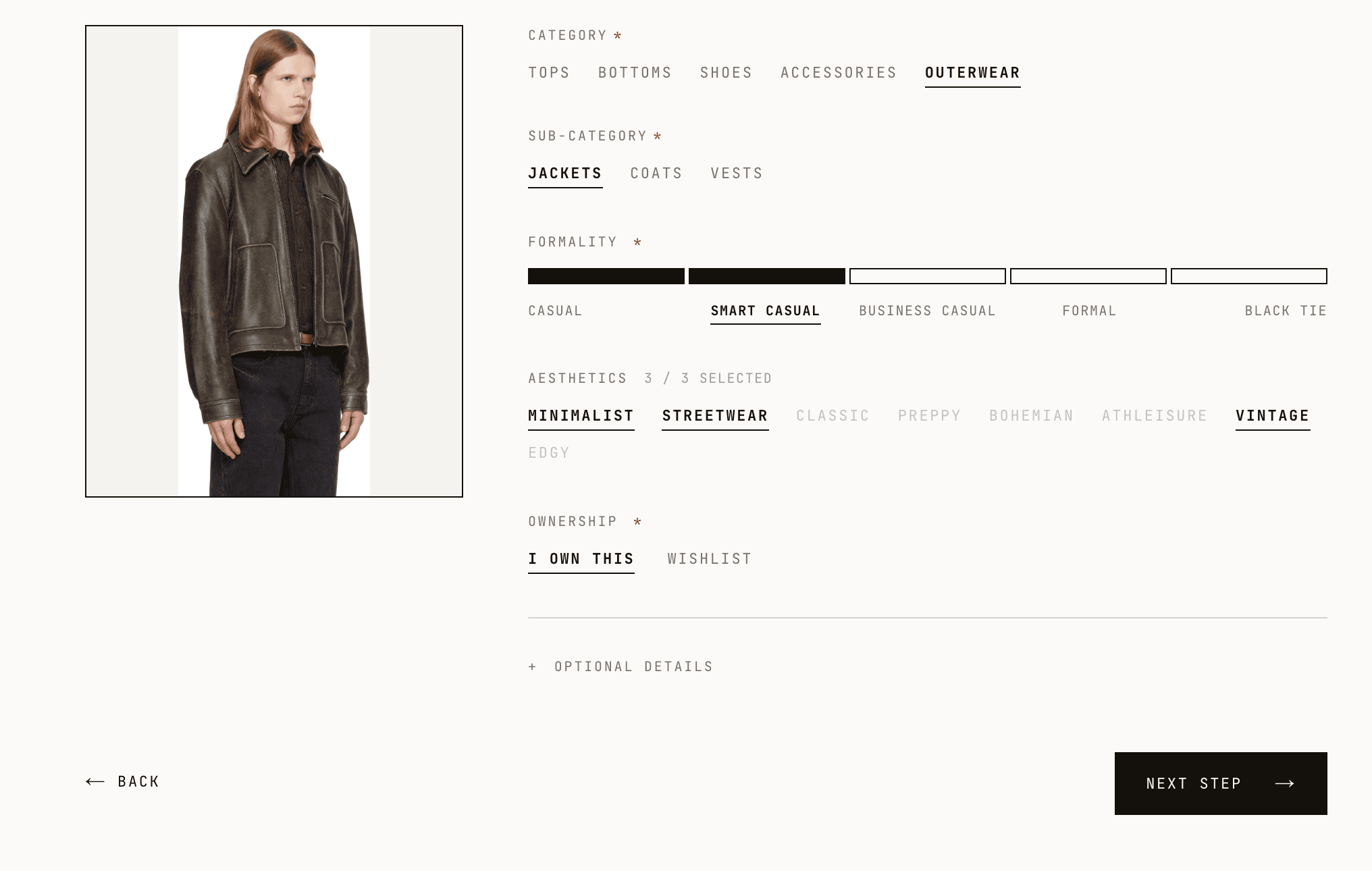
Style a piece you own
Upload your favorite piece with all of its details, and the engine will suggest what to pair it with.
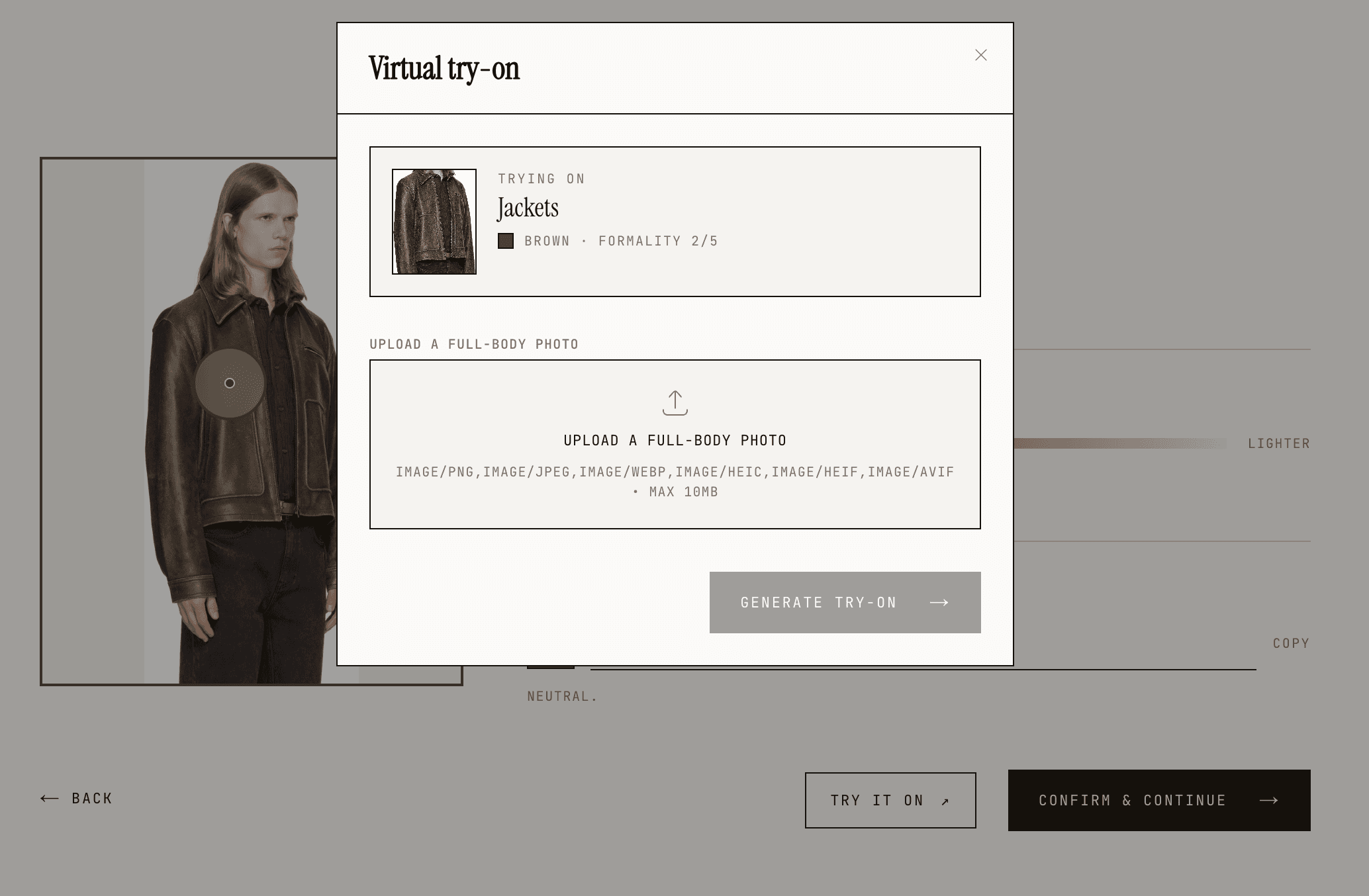
Try it on with AI
See the finished outfit on your own photo before you commit with Google Nano Banana Pro frontier image model.
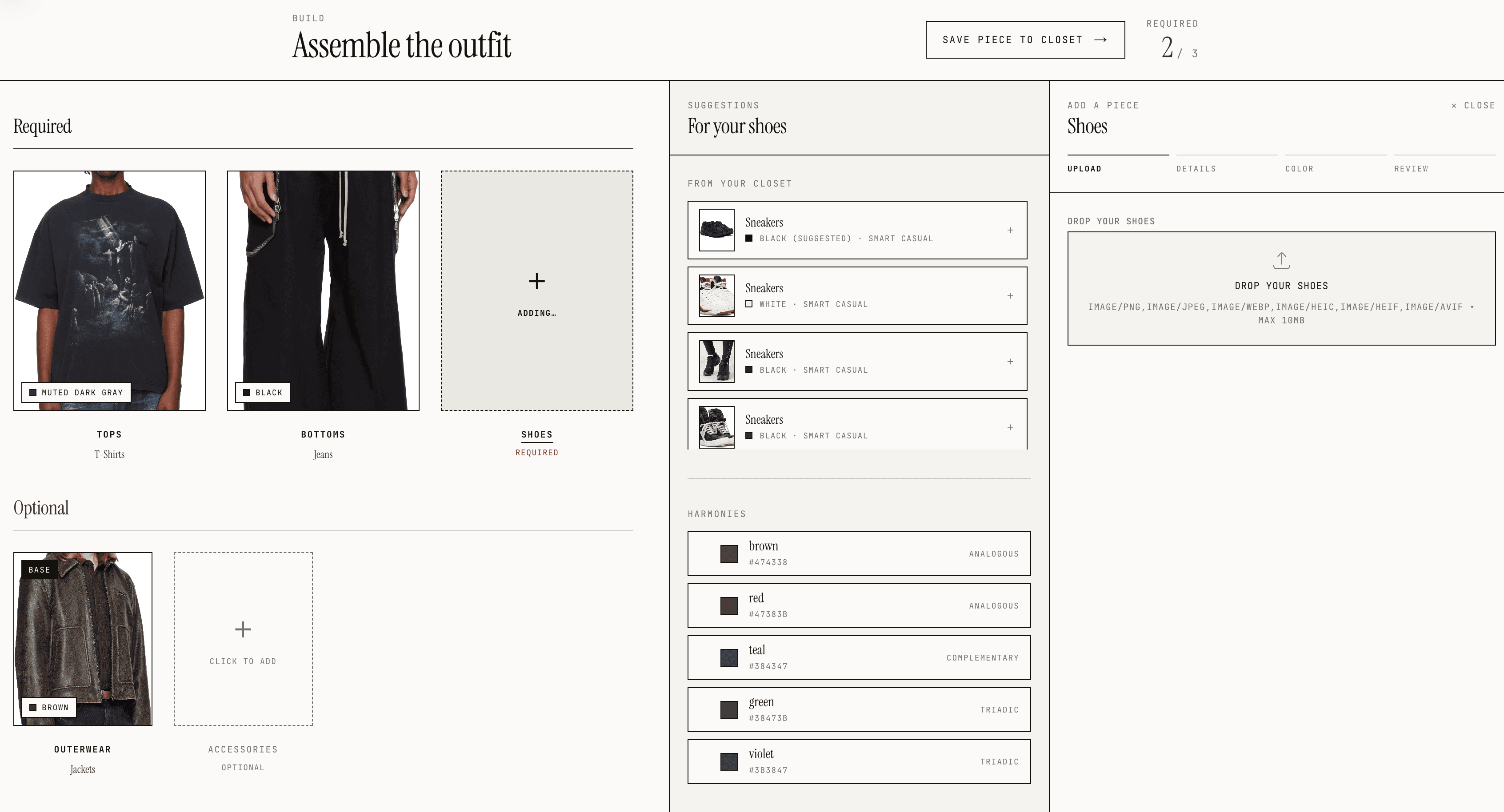
Mix and match
Pair anything new against every piece your closet already holds.
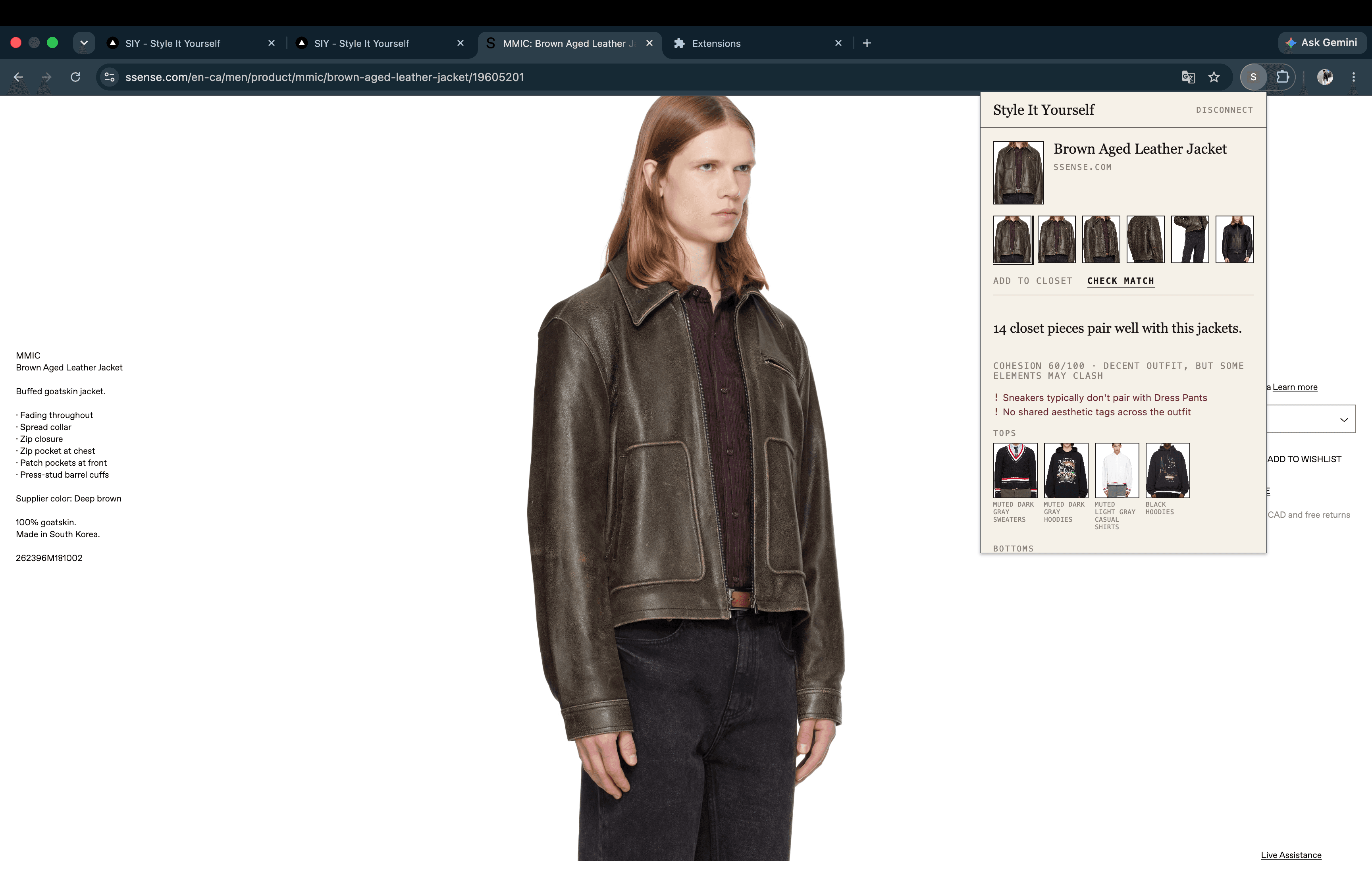
Use it on any store
The Chrome extension reads product pages anywhere on the web, so you can style it yourself without leaving the retailer.
Color theory
The color engine
Every color is read as an angle on a 360 degree wheel. When two pieces meet, the engine measures the arc between their hues, and the arc decides whether they belong together.
Within 30 degrees the colors are analogous: neighbors that share an undertone. At 180 they are complementary, opposites that sharpen each other. At 120 apart they form a triad, three families in equal tension.
Neutrals never appear on the wheel because they have no hue to place: zero saturation means no angle and no arc. They pair with everything.
Recommended readings
 How to master color theory in clothing
- Pointed at210°
- Blue210°
- Analogous±30°
- Teal180°Blue240°
- Complementary180°
- Orange30°
- Triadic±120°
- Green90°Pink330°
- Neutralno angle
- Pair with everything